
It usually starts with something easy to dismiss: a faint whistle after a loud evening, a soft hum at bedtime, or a high-pitched tone that seems to appear only when the room gets quiet.
So people compensate. They turn up the television. Raise the volume in their headphones. Lean closer during conversations. Then they repeat the cycle the next day — often without realizing that more noise is the last thing a sensitive auditory system needs.
The National Institute on Deafness and Other Communication Disorders describes tinnitus as the perception of sound without an outside source. It estimates that 10% to 25% of adults experience it, and considers tinnitus chronic when it lasts three months or longer.[1]
But here is the part many people miss: tinnitus is not one single disease with one single cause. It can be associated with hearing loss, noise exposure, certain medications, earwax, jaw problems and blood-vessel conditions, among other factors.[1]
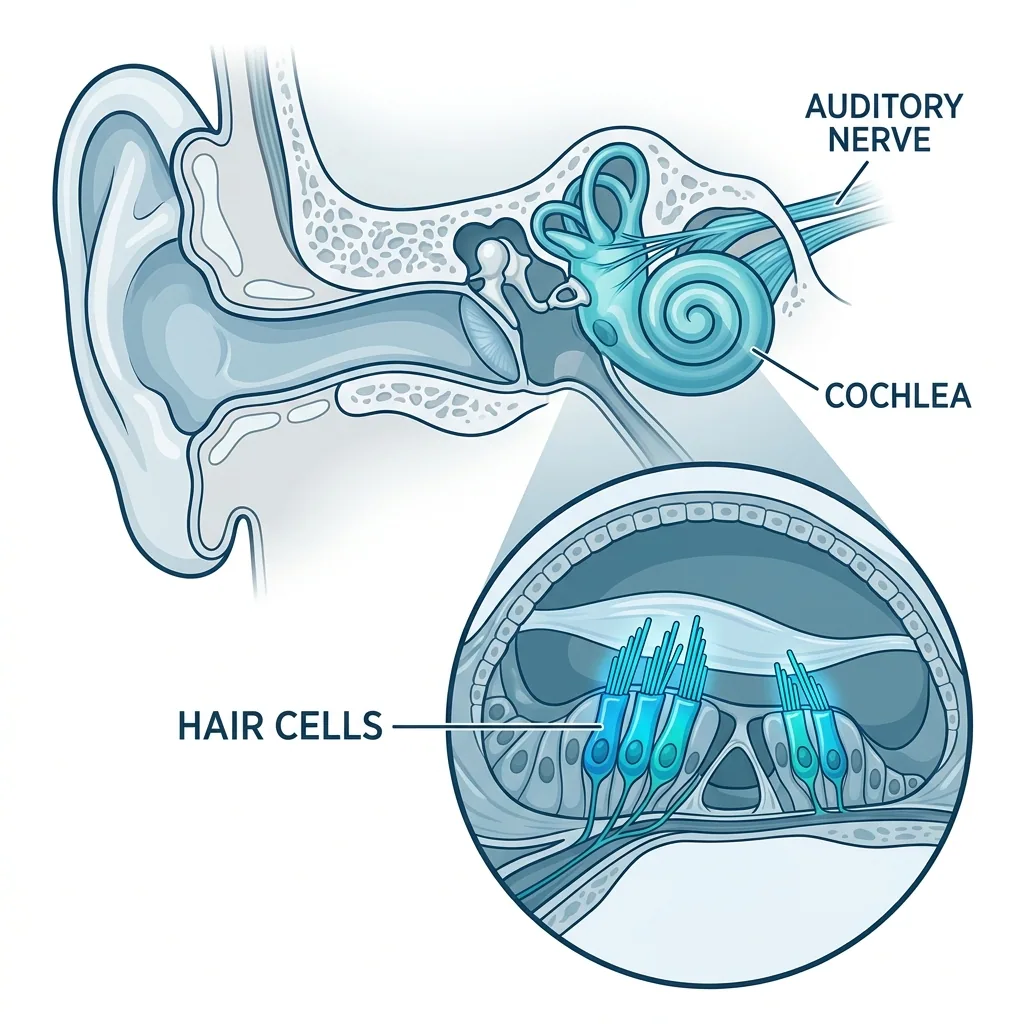
“The sound may seem to come from the ear, yet research suggests the brain’s auditory networks also help create and amplify the perception.”
Summary of current NIDCD researchThe common habit that can keep the cycle going
When conversation becomes harder to follow, the natural reaction is to turn everything up. Yet long-term exposure to loud sound — including amplified music played at high volume through headphones — can contribute to hearing loss and tinnitus, according to Mayo Clinic.[2]
Compensating for unclear sound by repeatedly increasing the volume. It may feel helpful in the moment, but sustained loud listening can add stress to the very system already working harder to process sound.
Stress can make the experience feel even more intrusive. A review of adult studies found that people with tinnitus often report louder or more bothersome symptoms during periods of stress, although the relationship varies and researchers have not established a simple one-way cause.[3]
Why “just live with it” is not a complete answer
There is currently no proven cure for tinnitus, and supplements should never be presented as one. Still, “nothing can be done” is also misleading. A clinician can look for treatable contributors and discuss evidence-based options such as sound therapy, hearing support and behavioral therapy.[1]
At home, protecting your ears from excessive noise, keeping headphone volume reasonable, sleeping consistently and supporting overall cardiovascular health are practical foundations. Some adults also choose a daily nutritional formula as one supportive part of that wider routine.
A closer look at a formula built around ear-health support
One option now attracting attention is AudiLeaf®, a liquid dietary supplement formulated for general ear health. It does not claim to diagnose or treat tinnitus or hearing loss. Instead, its formula is positioned around three everyday support goals: healthy circulation, normal auditory nerve function and resilience to listening-related stress.